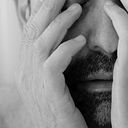
Photographers: Are you a Pictorialist or a Modernist?
How Photoshop (and Gen-AI) fit in the historical swing of photography
In the early years of photography there was a sense it was all a mechanical reproduction of the world, the way we might have thought of a Xerox copy. Cameras were large, processing was laborious, and exposures were long. Almost all photos being made were portraits, and if not a portrait, a landscape.
But it wasn’t “Art.” The model for art was painting — it took skill and talent, and the subject matter was highly considered and purposeful. It was created after years of training and through many hours of applied effort. The photographers were pushing a button. Click. And then doing a lot of chemistry. The process just didn’t seem like art.
But a number of photographers rejected this position. They felt photography could be art; and it became a movement known as “pictorialism” — where the photographers didn’t just push the button; they used additional work to transform a snap into “art-photography.”
From the 1860s and for more than fifty years, pictorialist pioneers like Henry Peach Robinson, Oscar Gustave Rejlander, Julia Margaret Cameron, and Edward Steichen employed a variety of techniques of transformation: softening sharpness, using special papers and emulsions, hand-coloring prints, and combining negatives to create montages. They often chose subjects that were allegorical or mythological and meticulously posed elements and settings to create more formal compositions.
But the new century brought new cameras and technology: faster film, dynamic subjects, more unusual vantage points: the kinds of images produced and the photographer’s approach were all shifting. Where pictorialists could sit in a studio and pose their subjects and details carefully, new photographers were shooting in the real and complex world, composing on the fly; modern photographers felt the act of shooting itself imposed their creative objectives. Pictorialists felt the new kind of shooting was cheap, unplanned and haphazard — and when the photo was good it was often because the photographer just got lucky. Pictorialists didn’t believe in that sort of luck. Photography was a practiced craft, and photos required more effort.
Photographers like Alfred Steiglitz, who began the 1900s as an intellectual leader of the pictorialist movement, shifted in his opinions of the art form. He was the de facto arbiter of photographic art in those years, and was already embracing an East coast industrial sort of modernism as the new approach.
Hungry for Stieglitz’s approval, a dozen California photographers assembled — Edward Weston, Imogen Cunningham, Ansel Adams… and they offered their version of modernism that they called “f64”. The photo was enough, it didn’t need to be tweaked to imitate a painting. And it didn’t need to embrace the trappings of the modern world to be modern. They embraced the optical properties of the technology. Their images were modern because they showed common things in unusual ways — with cropping and lighting and perspective. They played with scale and abstraction.
From the manifesto for f64:
[We want photographers] who are striving to define photography as an art-form, a simple and direct presentation through purely photographic methods. … Pure photography is defined as possessing no qualities of [technique], composition or idea, derivative of any other art-form. The production of the ‘pictorialist,’ on the other hand, indicates a devotion to principles of art which are directly related to painting and the graphic arts.
And in stark contrast to the fuzzy images produced by pictorialists, these modernists insisted on clarity (the “clearness and definition of the photographic image…”) going so far as to name their group for the pin-hole sized aperture that would produce enormous depth and sharpness. This sharpness separated them both from the fuzzy pictorialists and the poor resolution of amateur snapshooters.
But there were other responses to modernism in the 20th century — the camera became a tool of photojournalism, with its ethics of non-intervention, and less interest in craftsmanship. And for a time, the photographic record was popularly experienced as “truth.” Even as Weston made his case in the 1920s that all photography was a “willful distortion of fact,” and that even the most ‘authentic’ image was always the result of the biases of the photographer. It was precisely because all photography was a sort of fiction that it could be an art form. The real anomaly was its concurrent use in journalism, where this utterly subjective medium was ironically also a document of objective reality. As we now are reminded through new technologies, images are malleable. While they always were, that too has been democratized.
Today there are photographers who continue to embrace the principles of pictorialism: working to “make” art, posing subjects, “conceiving and executing” ideas, using post production (and even generative-AI) tools liberally in an effort to sculpt the image they want to produce. The end justifies the means. While there still could be a distinction made between images created with and without light, the idea of modifying — even quite substantially — an image to produce a different image, is reasonably core to a pictorialist approach.
Alternatively, there are modernists, for whom images do not need processing beyond the distortions and affect of the optical device itself. The process can be constrained in any number of ways, to fit within a practice. They are, like Cartier-Bresson, noticing and capturing the world around them, revealing beauty in the everyday, maintaining some personal ethics of authenticity in a medium that has far less than it seems.
The lines between these camps are neither solid nor permanent — Ansel Adams began as a pictorialist but eventually shifted to join his community as a modernist. And yet his darkroom work to craft a beautiful photograph was consequential, and he had more in common with pictorialist photographers like Jerry Uelsmann than a modernist like Henri Cartier-Bresson. Cartier-Bresson generally didn’t print his own photos. For Adams and Uelsmann, the darkroom was key their creativity.
When Adams famously said “the negative is the score, and the print is the performance,” he was suggesting that the negative was just the starting point, but the art was in the unique execution of each print. But less widely recognized was that he was also referring to the literal darkroom effort — like Uelsmann, where every print involved a complicated choreography of burning and dodging, and they both did this as an actual dance, a private performance.
That’s what I didn’t understand as a kid: Uelsmann — even with all his avant-garde thinking and surreal images, the most modern and unique guy in photography in the 1970s, was a pictorialist. It’s why he respected Robinson and Rejlander (in his self portrait); it’s why he bonded with the elder Ansel Adams, another darkroom maestro. Their ability to push the limits of the print heralded the beginning of the end of modernism.
Today we no longer consider these divisions in photography, certainly not in the world where virtually everyone is a photographer. The lines are blurred, as perhaps most images are a hybrid of these ideas, further incorporating attributes from other movements like postmodernism and conceptual art. But I believe the original distinctions are worth revising. The “image-paintings” produced today through Adobe tools and Gen-AI are not much different than those produced in the late 1800s. And the artists who utilize these tools frequently struggle to feel legitimate in a photographic world. Perhaps if they identified as modern pictorialists — less concerned with attributes of authenticity and embracing attributes of imagination — they could better align themselves with the ebbs and flows of photographic history.
One feature in this digital era is often towards images modified to look like something they’re not (think of Snapchat and Instagram filters), or those actually rendered through alternative processes (tin-types, cyanotypes, Polaroids, etc.)— all of these are particularly pictorialist tendencies. Those photos are trying to portray as old, very much the way early pictorialists felt the need to emulate painting. And modernism, with its devotion to a kind of naturalistic approach, straight “pure” shooting, and often reduced to monochrome, is oddly the “old-fashion” alternative. As a movement, I’d say modernism’s dominance ended with the arrival of digital photography, and most photographers now lean towards the pictorialist agenda.
So what kind of photographer are you?
If you enjoyed this, you might like: